What crypto remittance actually means today
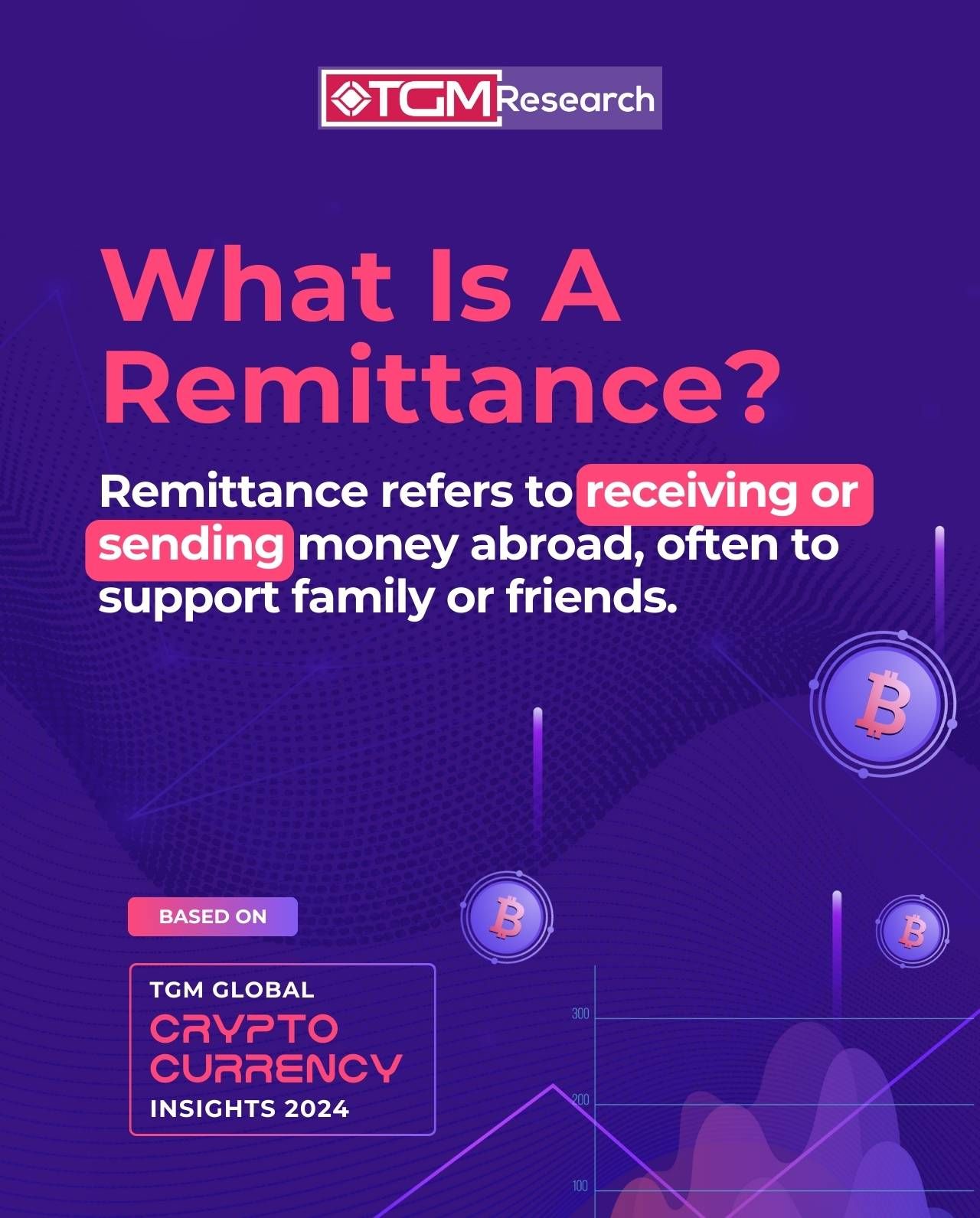
Crypto remittance is the use of blockchain networks to move money across borders. It is not about trading or speculation. It is about moving value efficiently from one country to another using digital currencies. While general crypto trading involves buying and selling assets to profit from price changes, remittance focuses on the transfer itself. The goal is speed and lower cost, not investment returns.
The traditional remittance system relies on a chain of correspondent banks. Each bank in the chain takes a cut, and the process can take days. Crypto remittance bypasses this intermediation. Transactions settle on-chain, often in minutes or seconds. The primary vehicle for this is stablecoins because they offer the speed of blockchain with the predictability of fiat. This makes them the practical choice for cross-border payments.
The "holy grail" of cross-border payments is a solution that is immediate, cheap, and universal. Stablecoins bring us closer to this by removing the need for pre-funded nostro/vostro accounts and reducing settlement risk. For the global crypto remittance guide, understanding this distinction is critical: you are using technology to move money, not to gamble on market trends.
how stablecoin remittances work step by step
Moving money across borders used to feel like waiting for a letter to travel through the postal system. Stablecoins change that by turning your bank account into a digital wallet that sends value instantly. Think of it like swapping a physical ticket for a digital key that opens the door on the other side of the world.
Here is the practical flow of a global crypto remittance, from the moment you start the transfer to the moment the recipient spends the funds.
The process begins on the sender's side. You exchange your local currency (like USD or EUR) for a stablecoin, typically USDC or USDT, through a regulated exchange or a dedicated remittance app. This step locks in the value you intend to send. The exchange verifies your identity and processes the fiat withdrawal, crediting your digital wallet with the stablecoin equivalent.
Once you hold the stablecoin, you initiate the transfer to the recipient's wallet address. Unlike traditional wire transfers that pass through multiple correspondent banks, this transaction is broadcast to the blockchain network. It is validated by nodes and added to a block, usually within seconds or minutes. This on-chain settlement is where the speed advantage of the global crypto remittance guide comes into play.

The recipient receives the stablecoin in their digital wallet. To use the funds in their daily life, they sell the stablecoin for their local fiat currency through a local exchange, a peer-to-peer marketplace, or a crypto-friendly bank. This off-ramp step converts the digital asset back into spendable cash, completing the cross-border journey.
verifying the peg stability
A critical part of this workflow is trusting that one stablecoin equals one unit of fiat. If the peg breaks, the value you sent could disappear. We monitor USDC against the US dollar to ensure the infrastructure remains reliable for these transfers.
tools for secure transfers
While the blockchain handles the movement, you need reliable tools to manage your keys and verify transactions. Secure hardware wallets and clear transaction explorers are essential for maintaining control over your assets during a remittance.



As an Amazon Associate, we may earn from qualifying purchases.
Comparing costs: Traditional rails vs. crypto infrastructure
When sending money across borders, the difference between traditional banking rails and cryptocurrency infrastructure comes down to two things: how much you pay and how long you wait. For the global crypto remittance guide, understanding these mechanics is essential because they directly impact the value received by families and businesses in emerging markets.
Traditional methods like SWIFT and money transfer operators (MTOs) rely on a network of correspondent banks. Each intermediary in the chain takes a cut, and delays are common because transactions must pass through multiple compliance checks and time zones. According to the World Bank, the global average cost of sending $200 remains stubbornly high at 6.3%, with some corridors costing significantly more. Stripe notes that these legacy systems were built for a pre-digital era, creating friction that keeps costs artificially inflated for the end user.
In contrast, crypto remittances use blockchain infrastructure to move value peer-to-peer. By using stablecoins on efficient networks like Polygon or Solana, transactions can bypass the correspondent banking layer entirely. This means fees often drop to less than 1%, and settlement happens in minutes rather than days. The goal of immediate, cheap, and universal transfers is finally becoming a practical reality rather than just a theoretical goal.
The table below breaks down the concrete differences in fees, speed, and availability.
| Metric | Traditional (SWIFT/MTO) | Crypto (Stablecoins) |
|---|---|---|
| Average Fee | 2% - 7% + hidden FX spreads | < 1% (network gas fees) |
| Settlement Time | 1 - 5 business days | Seconds to minutes |
| Availability | Limited by banking hours and corridors | 24/7/365 global access |
| FX Spread | 3% - 5% markup on mid-market rate | Near mid-market rate |
The global remittance landscape is shifting
The global remittance market is growing steadily, but the way money moves across borders is changing. According to the Migration Data Portal, global remittance flows are estimated to have increased by 4.6% from $865 billion in 2023 to $905 billion in 2024. This growth outpaces many traditional economic indicators, signaling that people are finding new ways to send money home.
While traditional banks and money transfer operators still dominate the volume, stablecoins are carving out a significant niche. In a 2026 guide by PureFi, the focus is on how crypto remittances offer a cheaper, faster alternative to the old banking rails. Instead of relying on correspondent banks that can take days to settle, transactions settle on-chain, often using stablecoins that can be converted to fiat instantly.
To understand the scale of this shift, it helps to look at the liquidity driving it. The stability and widespread adoption of major stablecoins mean they act as the primary vehicle for these cross-border payments. Below is the current live price of USDT, one of the most widely used stablecoins in remittance corridors, which helps contextualize the market cap and liquidity available for these transactions.
This liquidity is critical. When billions of dollars in stablecoins are available for instant settlement, the friction that usually slows down international transfers disappears. For the global crypto remittance guide, this shift represents a move from slow, expensive banking infrastructure to a faster, more transparent digital network.
Choosing the right infrastructure for your use case
Selecting the right blockchain network is the difference between a smooth remittance experience and a transaction that gets stuck or costs more than the fee itself. For a global crypto remittance guide, the goal is to match the network’s technical strengths with your specific needs for speed, cost, and regional accessibility.
Stablecoin remittances work by settling transactions directly on-chain, often bypassing traditional correspondent banks. This infrastructure allows value to move across borders faster and at a fraction of the cost. However, not all blockchains are built the same way. Some prioritize raw transaction throughput, while others focus on deep liquidity or specific regional integrations.
The holy grail of cross-border payments is a solution allowing cross-border payments to be immediate, cheap, universal, and settled in a secure settlement medium.— SUEMF Research
To find that solution, you need to evaluate the tradeoffs. A network like Solana offers high speed and low fees, making it ideal for high-volume, low-value transfers. Polygon provides robust Ethereum compatibility, which is crucial if your recipients or partners already use Ethereum-based wallets. Stellar, on the other hand, has long focused on financial inclusion and direct fiat on-ramps in emerging markets.
Before committing to a network, consider the local ecosystem. A technically superior chain is useless if there are no easy ways to convert crypto to local fiat in the recipient's country. Check for the availability of local on-ramps and off-ramps. Regulatory compliance is also non-negotiable; ensure the network and the stablecoins you use are permitted in both the sending and receiving jurisdictions.
-
Check network fees for your specific transaction size.
-
Verify local on/off-ramp availability in the recipient's country.
-
Ensure regulatory compliance for the chosen stablecoin.
-
Test settlement speed with a small trial transaction.
Ultimately, the best infrastructure is the one that disappears into the background. Your users shouldn't care about the underlying blockchain; they should only care that the money arrives quickly, safely, and with minimal friction. Start by mapping out the recipient's preferred payment methods, then work backward to select the network that supports those methods most efficiently.
Frequently asked questions about crypto remittances
Crypto remittances use blockchain infrastructure to move value across borders faster and at lower cost than traditional rails. Instead of relying on correspondent banks or money transfer operators, transactions settle on-chain, often using stablecoins, with the option to convert instantly into fiat. This shift is central to any global crypto remittance guide looking at modern payment flows.
How to receive international payments through crypto?
Once you have a digital wallet, you are assigned a unique address that acts like a bank account number. To receive a payment, you simply share this address with the person sending the money. They initiate the transaction from their wallet, and the funds appear in yours once the network confirms the block. For stablecoins, this often means near-instant availability.
What is the holy grail of cross-border payments?
The "holy grail" refers to a payment system that is immediate, cheap, universal, and settled in a secure medium. For decades, international commerce has sought this balance, but traditional banking networks often struggle with speed and high fees. Cryptocurrencies aim to hit all four marks simultaneously by removing intermediaries and leveraging decentralized ledgers.
What is crypto remittance?
At its core, crypto remittance is the digital transfer of money across borders using cryptocurrency. It replaces or supplements the SWIFT network and money transfer agencies. By using digital assets, senders can bypass the slow processing times of traditional banks, while receivers can access funds that have not yet been converted to local currency, offering greater flexibility and transparency in the global crypto remittance landscape.
No comments yet. Be the first to share your thoughts!