How stablecoin remittances work
Global crypto remittance relies on a straightforward mechanism: converting fiat currency into a digital token, sending it across a blockchain network, and converting it back to local currency. The dominant vehicle for this process is the stablecoin, a cryptocurrency pegged 1:1 to a fiat currency like the US dollar. Unlike volatile assets such as Bitcoin, stablecoins maintain a predictable value, making them a practical settlement medium for everyday transactions.
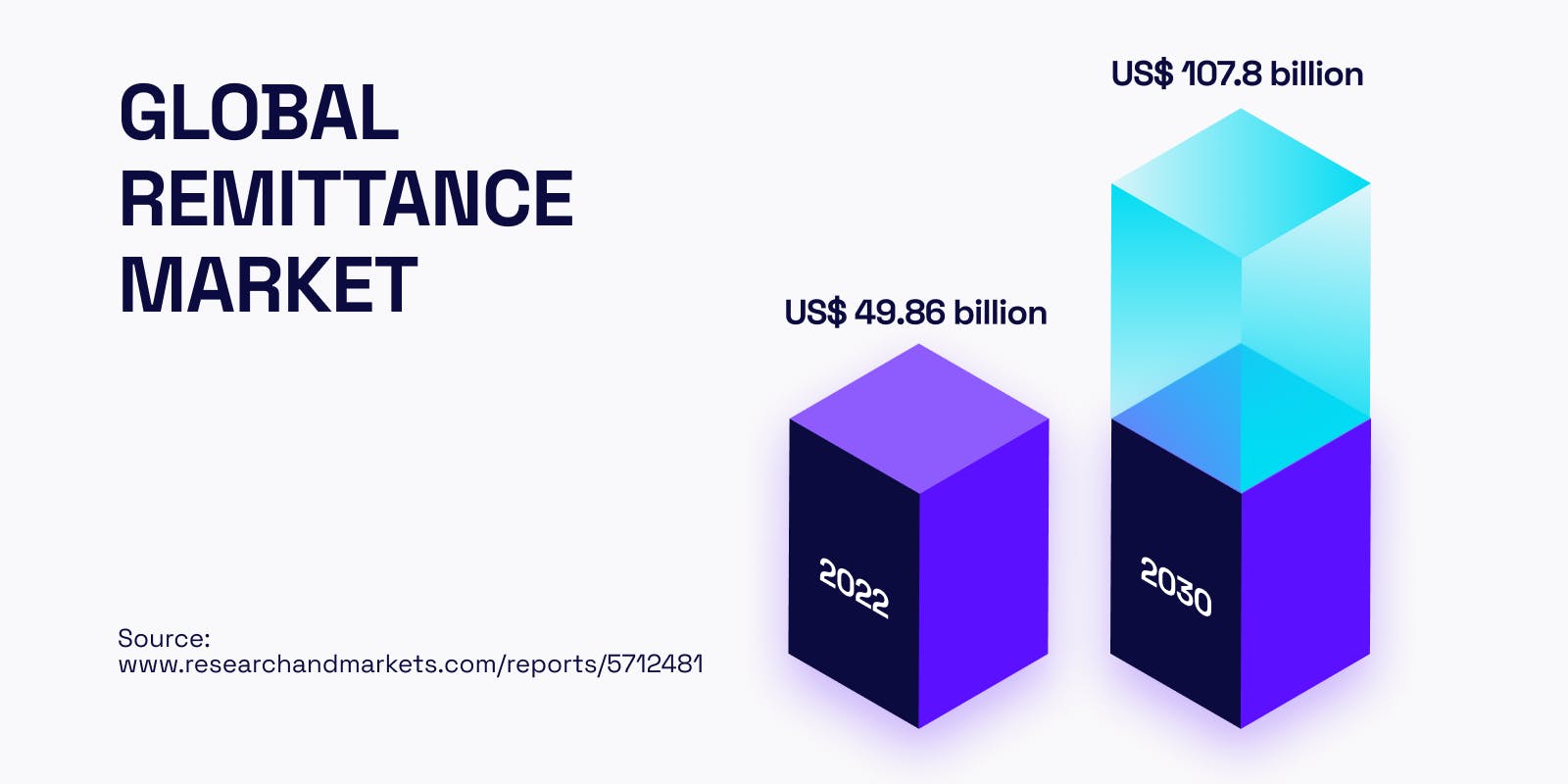
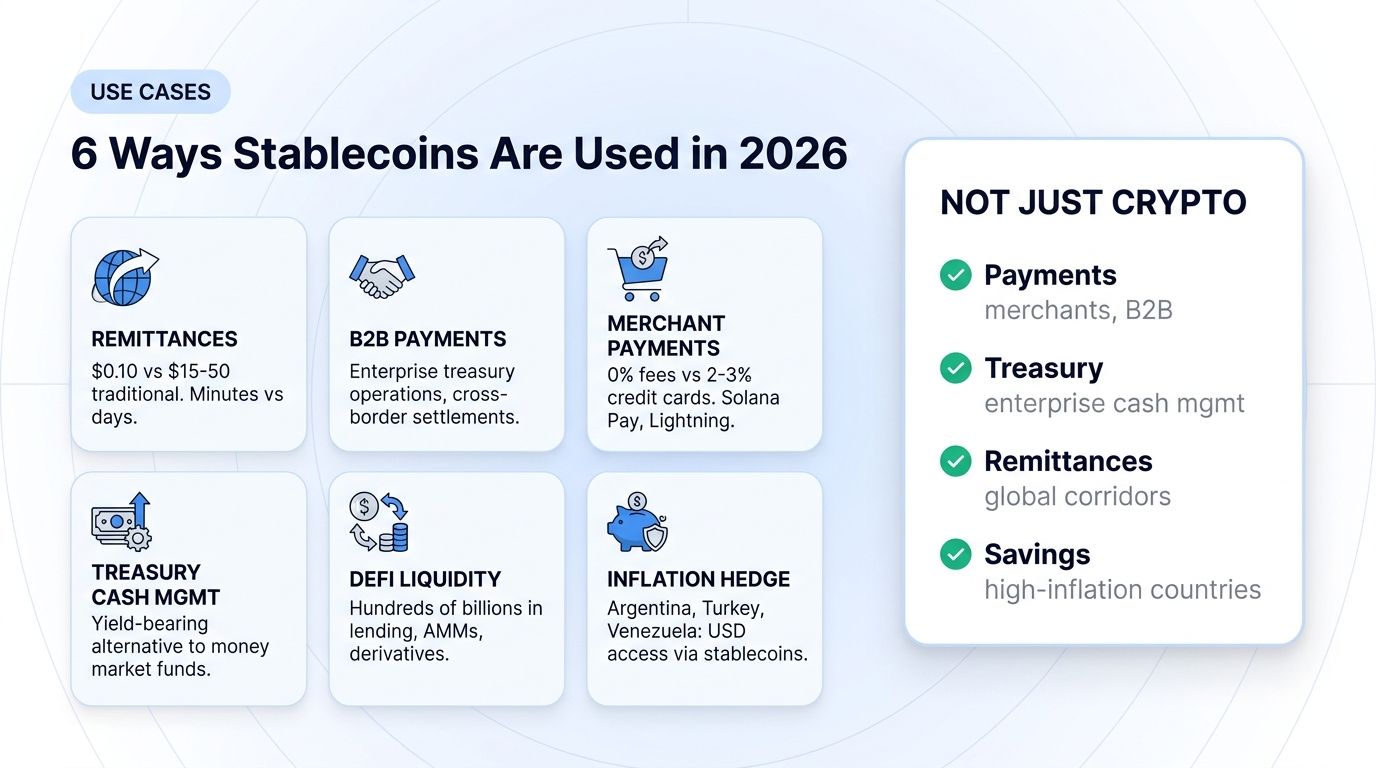
The ability to move money instantly, cheaply, and universally has long been the holy grail of cross-border payments. Stablecoins achieve this by bypassing the traditional correspondent banking system. Instead of routing funds through multiple intermediaries that each take a cut and add days to the settlement time, stablecoins move directly from sender to receiver on a blockchain. This infrastructure reduces friction and cost, turning international transfers from a multi-day logistical challenge into a matter of minutes.
To understand why stability matters, consider the difference between sending Bitcoin and sending USDT or USDC. If you send Bitcoin, the value might shift significantly between the moment you initiate the transfer and the moment the recipient cashes out. Stablecoins eliminate this exchange rate risk during transit. The sender knows exactly how much the recipient will receive, provided the peg holds.
The stability of these assets is critical for trust. A chart of USDT/USD demonstrates how closely these tokens track the dollar, ensuring that the value remains consistent across borders.
This predictability is what makes stablecoins the preferred choice for remittances. They offer the speed and low cost of crypto without the price swings that make other digital assets unsuitable for essential money transfers. For users in regions with high remittance fees, this stability and efficiency provide a tangible improvement over traditional wire services.
Cost and speed vs traditional corridors
When sending money across borders, the choice between crypto and traditional providers usually comes down to two metrics: how much it costs and how fast it arrives. For a global crypto remittance guide, understanding these tradeoffs is essential for making high-stakes financial decisions.
Traditional methods like Western Union, Wise, and major banks have built their reputations on reliability, but they often lag in speed and efficiency. A bank transfer might take three to five business days to clear, especially if it involves currency conversion or multiple intermediary banks. Even faster services like Wise can take one to two days, and while their fees are transparent, they often include a hidden foreign exchange (FX) spread that can eat into your transfer. Western Union, while offering near-instant cash pickup, typically charges higher upfront fees and less competitive exchange rates.
Crypto remittances, by contrast, operate on a different timeline. Transactions on networks like Bitcoin or Ethereum can settle in minutes or hours, depending on network congestion and the fees you are willing to pay. The cost structure is also fundamentally different. Instead of percentage-based fees and FX spreads, crypto transactions usually involve a network fee (gas) and a small exchange fee if you are converting fiat to crypto. For larger transfers, this can result in significant savings compared to the 5-10% total cost often associated with traditional remittance services.
However, crypto is not without its own set of challenges. Volatility can be a risk if you hold the asset during the transfer, and the user experience is still less intuitive than a simple bank app. But for those who prioritize speed and lower costs, the tradeoffs are often worth it.
| Provider | Est. Cost | Settlement Time | Reliability |
|---|---|---|---|
| Western Union | High (5-10%+) | Minutes (Cash Pickup) | High |
| Wise | Low-Medium (1-3%) | 1-2 Business Days | High |
| Bank Transfer | Medium-High (FX Spread) | 3-5 Business Days | Very High |
| Crypto (Bitcoin) | Low (Network Fee + Exchange) | 10-60 Minutes | Medium (Network Dependent) |
| Crypto (Stablecoins) | Low (Network Fee + Exchange) | Minutes | Medium (Network Dependent) |
The choice ultimately depends on your priorities. If you need absolute certainty and don't mind waiting a few days, a traditional bank or Wise might be the safer bet. But if you are sending a large sum and want to minimize costs and maximize speed, crypto remittances offer a compelling alternative. As the Migration Data Portal notes, global remittance flows are growing rapidly, and the technology reshaping these payments is becoming increasingly sophisticated.



As an Amazon Associate, we may earn from qualifying purchases.
The blockchain layers powering low-cost remittances
A global crypto remittance guide must address the infrastructure beneath the user interface. Sending money across borders relies on blockchain networks, but not all blockchains are built for the same purpose. The choice of layer determines whether a transfer costs pennies or dollars, and whether it settles in seconds or hours.
Ethereum Mainnet offers deep security and liquidity, but its transaction fees are often too high for small remittances. For cross-border payments, users typically prefer Layer 2 scaling solutions, sidechains, or high-throughput Layer 1s like Solana and Polygon. These networks process transactions off the main chain or use different consensus mechanisms to achieve lower costs and faster speeds.
Polygon, for instance, operates as a sidechain that settles on Ethereum but processes transactions independently. This allows it to offer near-instant finality with minimal fees. Solana uses a unique proof-of-history mechanism to handle thousands of transactions per second, making it a popular choice for high-volume payment flows. These infrastructure choices are critical for the viability of any global crypto remittance guide, as they directly impact the end-user experience.
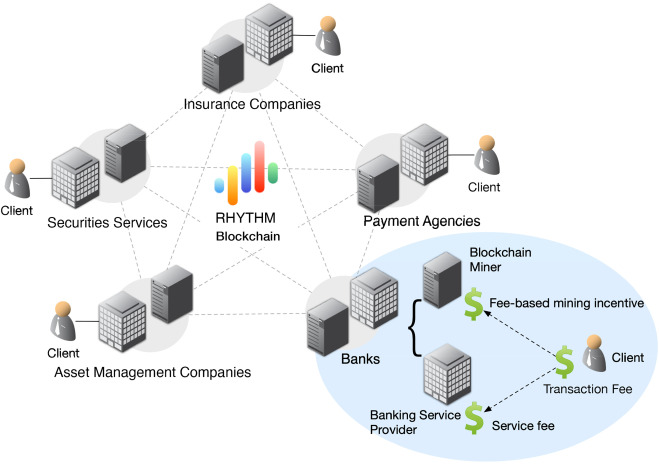
The trade-off is often decentralization versus cost. While Ethereum Mainnet is the most decentralized and secure settlement layer, it is rarely used for the actual transfer of small remittance amounts. Instead, it serves as the final settlement layer for larger institutional flows or as the security anchor for Layer 2 networks. For everyday users, immediate, cheap, and universal payments are found in these specialized infrastructures.
Navigating the Global Crypto Remittance Guide: Compliance and Regulatory Landscape
Cross-border finance operates in a high-stakes environment where regulatory compliance is non-negotiable. For any global crypto remittance guide, understanding the legal infrastructure is as critical as selecting the right wallet or exchange. The industry has moved past the "wild west" era; today, providers must adhere to strict frameworks to prevent illicit flows and protect consumers.
At the heart of this framework are KYC (Know Your Customer) and AML (Anti-Money Laundering) protocols. These requirements ensure that the entities moving funds are who they claim to be. Without robust identity verification, crypto remittances would remain vulnerable to sanctions evasion and financial crime, limiting their acceptance by traditional banking partners.
The Travel Rule and Data Privacy
A significant development in recent years is the implementation of the "Travel Rule." Originally designed for traditional wire transfers, this rule now applies to virtual asset service providers (VASPs). It mandates that when sending crypto above a certain threshold, the sender’s and recipient’s identity information must travel with the transaction. This creates a digital paper trail that mirrors traditional banking transparency.
Compliant infrastructure providers handle this by integrating with specialized messaging networks or using privacy-preserving technologies that verify identity without exposing unnecessary personal data. This balance allows for immediate settlement while satisfying regulatory audits. Ignoring these requirements can result in frozen assets, heavy fines, or the shutdown of remittance channels.
Choosing a Compliant Provider
When evaluating options for international transfers, prioritize providers that are licensed in their operating jurisdictions. Look for clear disclosures about their compliance teams and their adherence to FATF (Financial Action Task Force) guidelines. While this may add a layer of friction during onboarding, it ensures the longevity and reliability of your remittance channel.
Choosing the right crypto remittance tool
Selecting a global crypto remittance guide tool depends on whether you are an individual sender or a business receiver. Your priority usually falls into one of two buckets: speed for personal transfers or scalability for business payouts. Liquidity is the engine here; without deep order books, your stablecoin might trade at a premium or suffer slippage during high-volume periods.
For individuals, ease of on-ramping and off-ramping is the deciding factor. You need a provider that connects seamlessly to your local bank or card issuer. Look for platforms that support direct fiat withdrawals to local mobile money wallets or bank accounts in the recipient's region. If your network is primarily in Latin America or Southeast Asia, ensure the tool supports local stablecoin pairs like USDT/USDC with local currency liquidity.
Check the daily trading volume for your target stablecoin in the recipient's region. Low liquidity can delay settlements or increase fees.

Confirm that the platform supports your preferred funding method (bank transfer, card, or local wallet) and the recipient's payout method.
Ensure the provider is licensed to operate in both the sender's and receiver's jurisdictions to avoid frozen funds.
For businesses, the focus shifts to API integration, batch payouts, and regulatory reporting. Providers like Swapin and PureFi offer infrastructure designed for high-volume, recurring cross-border payments. These tools often provide dedicated support and lower per-transaction fees for volume, but require more technical integration than consumer apps.

Use a live price widget to monitor the stability of your chosen asset. Stablecoins are designed to peg to fiat, but temporary de-pegging events can occur. Monitoring the current price ensures you are not inadvertently sending assets with hidden volatility risk.
Ultimately, the right tool matches your specific use case. Individuals should prioritize user experience and local payout options, while businesses should prioritize API reliability and compliance features. Always test with a small amount first to verify the full cycle from send to receive.
-
Verify local payout support
-
Check transaction fees
-
Confirm regulatory compliance
-
Test with a small amount
A global crypto remittance guide is only as good as the tool you execute with. By focusing on liquidity, ease of access, and regional fit, you can minimize friction and maximize the efficiency of your cross-border transfers.
Frequently asked: what to check next
How to receive international payments through crypto?
Receiving funds is straightforward once you have a digital wallet. You will be assigned a unique address—a long string of characters—that acts like your account number. To receive a crypto payment, you simply share this address with the person sending the money. They initiate the transfer from their platform, and the funds appear in your wallet once the network confirms the transaction. Always double-check the address before sharing it to ensure the sender is targeting the correct destination.
Is crypto remittance safe for large transfers?
Safety depends on your security practices. Cryptocurrency transactions are immutable, meaning they cannot be reversed once confirmed, which protects merchants from chargeback fraud. However, this also means if you send funds to the wrong address, they are gone forever. For large transfers, use reputable exchanges with strong security protocols, enable two-factor authentication, and consider using stablecoins to avoid the volatility risk associated with assets like Bitcoin or Ethereum during the transfer window.
What are the tax implications of crypto remittances?
Tax treatment varies by jurisdiction, but in many countries, converting fiat to crypto and then to fiat again can trigger taxable events. It is crucial to track the fair market value of the asset at the time of receipt and disposal. Using compliant tax software that integrates with your exchange accounts can help automate this reporting and ensure you remain compliant with local regulations.
No comments yet. Be the first to share your thoughts!