Why remittances need a crypto strategy
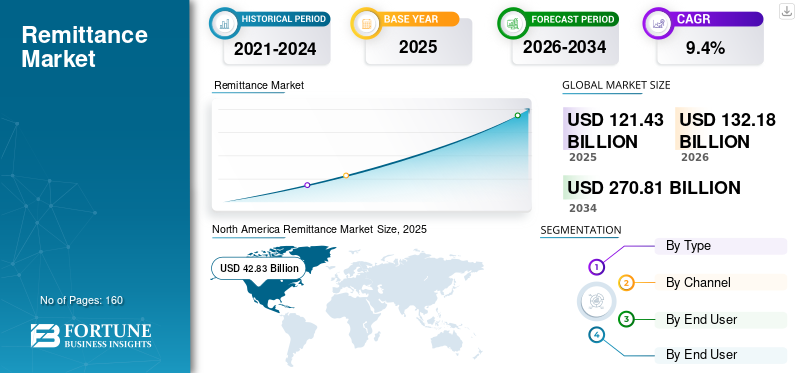
Global remittance flows hit an estimated $905 billion in 2024, with $685 billion directed toward low- and middle-income countries. This isn't just a niche market; it is the financial lifeline for hundreds of millions of families. Yet, the traditional infrastructure moving this money is showing its age. High fees, slow settlement times, and opaque exchange rates eat into what families actually receive.
The inefficiency is structural. Traditional banking corridors rely on a chain of correspondent banks, each taking a cut and adding days to the process. For a worker sending money home on a Friday, the recipient might not see the funds until Tuesday or Wednesday. In an economy where daily expenses matter, that delay is costly.
A global crypto remittance strategy addresses these friction points directly. By leveraging blockchain networks, senders can bypass intermediate banks, reducing costs and settling transactions in minutes rather than days. This isn't about replacing traditional finance overnight; it's about building a parallel, more efficient channel for the most critical flows of capital.
The shift isn't just technological; it's economic. When you remove the middlemen, you keep more money in the hands of the sender and the receiver. For businesses and individuals alike, this efficiency translates to real savings and faster access to liquidity. As regulatory frameworks mature, the gap between traditional and crypto remittance will likely narrow, but the efficiency advantage of crypto will remain a compelling reason to adopt a hybrid strategy.
Mapping the remittance infrastructure
Modern crypto remittance isn’t a single blockchain; it is a stack of technical layers working in sequence. Understanding how stablecoins, layer-2 networks, and fiat on-ramps interact is essential for building a strategy that is both fast and compliant.
Stablecoins as the settlement layer
Stablecoins function as the digital equivalent of cash in transit. They provide a bridge between volatile cryptocurrencies and the fiat values users expect. For global remittance, USDC and USDT dominate because of their deep liquidity and widespread acceptance across exchanges and payment processors.
The primary advantage is predictability. Unlike Bitcoin or Ethereum, stablecoins maintain a 1:1 peg to fiat currencies, eliminating exchange rate risk during the transfer window. This stability allows remittance providers to quote fixed fees and arrival times, a critical requirement for users sending money to family abroad.
Layer-2 networks for speed and cost
Sending transactions directly on Ethereum’s mainnet is often too slow and expensive for small remittances. Layer-2 (L2) networks like Arbitrum, Optimism, or Base solve this by processing transactions off the main chain and then batching the results back to Ethereum for security.
This architecture reduces gas fees by 90-95% while maintaining the security guarantees of the Ethereum base layer. For a $50 transfer, mainnet fees could exceed $5, making the transaction economically unviable. L2s bring that cost down to cents, enabling micro-remittances that are practical for everyday use.
Fiat on-ramps and off-ramps
The final layer is the connection to the traditional banking system. On-ramps allow users to convert fiat currency (USD, EUR) into crypto, while off-ramps convert crypto back into local fiat for the recipient. This is often the most complex part of the infrastructure due to regulatory requirements.
Providers must integrate with licensed payment processors and adhere to Anti-Money Laundering (AML) and Know Your Customer (KYC) regulations. The goal is to minimize friction at these touchpoints. A seamless user experience requires that the on-ramp and off-ramp processes are automated, instant, and compliant with local laws in both the sender’s and recipient’s jurisdictions.
Choosing tools for your strategy
Selecting the right infrastructure depends on whether you are moving money as an individual or operating a small business. The gap between personal and commercial needs is wide: individuals prioritize ease of use and low minimums, while businesses require API integration, compliance reporting, and higher throughput.
Individual wallets and consumer apps
For personal remittances, stablecoins like USDC or USDT on low-fee networks (Solana, Stellar, or Layer 2s) offer the best balance of speed and cost. Consumer-friendly apps like Stripe Crypto or MoonPay act as gateways, allowing users to buy crypto with a card and send it directly to a recipient’s wallet. These tools bridge the fiat-crypto divide but often charge a 1-3% convenience fee on the on-ramp/off-ramp legs.
Business-grade payment processors
Small businesses sending payroll or supplier payments need more than a wallet. They need tools that handle regulatory compliance (KYC/AML) automatically. Platforms like BitPay or Coinbase Commerce provide invoicing and settlement in stablecoins, reducing the friction of cross-border bank transfers. For B2B, integrating a payment gateway that supports stablecoin settlement can cut processing times from days to minutes.
Comparison of remittance tools
The table below compares common tools based on typical fees, settlement speed, and regional availability. Note that fees vary by network congestion and asset type.
| Tool Type | Est. Fee | Speed | Best Regions |
|---|---|---|---|
| Consumer Wallets (e.g., Trust Wallet) | Network gas ($0.01-$1) | 1-5 mins | Global |
| On-Ramp Apps (e.g., MoonPay) | 1-3% + spread | Instant buy, 1-5 min transfer | US, EU, UK |
| B2B Gateways (e.g., BitPay) | 1-2% processing | Minutes | US, EU, LATAM |
| Cross-Border Networks (e.g., Stellar) | < $0.01 | 3-5 seconds | Asia, Africa, LATAM |
Market context
The cost advantage of crypto remittances is most visible when compared to traditional SWIFT transfers, which can take 3-5 days and charge $20-$50 per transaction. While crypto networks can experience congestion, the underlying infrastructure remains significantly cheaper for smaller, frequent transfers.
Navigating the legal landscape
Cross-border crypto transfers operate in a regulatory gray zone that is rapidly solidifying into strict compliance frameworks. You cannot treat a wallet address like a generic bank account; you are moving value across sovereign jurisdictions, each with its own rules on Anti-Money Laundering (AML) and Know Your Customer (KYC) protocols.
The Financial Action Task Force (FATF) "Travel Rule" requires you to share sender and receiver information for transfers above a certain threshold. This isn't just bureaucratic fluff—it is a hard technical requirement for most centralized exchanges and payment providers. If your strategy relies on decentralized protocols, you still bear the liability if your platform facilitates non-compliant transactions. Ignoring these rules doesn't just risk fines; it can lead to frozen assets and permanent bans from financial rails.
Tax implications are equally complex. Many jurisdictions treat crypto remittances as taxable events, even if the funds are moving from one crypto wallet to another. You must track the cost basis at the moment of transfer and again at the moment of receipt or conversion to fiat. A failure to report these transactions correctly can result in significant penalties that far exceed the savings from lower transfer fees.
To stay ahead, prioritize platforms that offer built-in compliance tools and clear reporting features. The cost of compliance software is negligible compared to the cost of legal remediation. Treat regulatory adherence not as an obstacle, but as a core component of your infrastructure.
Avoiding the Hidden Costs of Crypto Remittances
Sending crypto across borders looks simple on paper, but small operational errors can quickly erode your margins. Even if you choose a low-fee network, you are not immune to the friction inherent in moving value internationally. Understanding where money leaks out of the process is just as important as picking the right coin.
Network congestion is the most common trap. During peak hours, gas fees on popular chains like Ethereum can spike dramatically, sometimes costing more than the transfer itself. This volatility is why you must monitor the current state of the network before initiating a transaction. If the network is congested, waiting or switching to a Layer-2 solution can save significant capital.
Chain selection matters as much as timing. Sending USDC on the wrong network—for example, sending it via the ERC-20 standard when the recipient expects TRC-20—can result in lost funds or complex recovery processes. Always verify the exact network protocol with your recipient before sending. A mismatch here is a permanent error that no amount of technical savvy can easily reverse.
Liquidity slippage often goes unnoticed until the final step. When converting fiat to crypto or crypto to fiat, low liquidity in certain pairs means you will receive less than the mid-market rate. This "spread" is a hidden tax on your remittance. Using deep-liquidity pairs or established exchanges minimizes this loss, ensuring more of your money actually reaches the recipient.
Frequently asked questions about global remittance payments
What is a global remittance payment?
A global remittance payment is the transfer of money across national borders, typically sent by individuals working outside their home country to family or friends back home. According to Stripe, these flows reached an estimated $905 billion worldwide in 2024, with $685 billion directed to low- and middle-income countries. While traditional banking networks dominate this space, crypto remittances offer a faster, often cheaper alternative for moving these essential funds.
How do crypto remittances work?
Crypto remittances bypass traditional correspondent banking networks by using blockchain technology to settle transactions directly. Instead of multiple intermediaries taking cuts and days to clear, a sender converts fiat to a stablecoin or cryptocurrency, transfers it on-chain, and the recipient converts it back to local currency. This process can take minutes rather than days, significantly reducing the friction and cost associated with international wire transfers.
Why use crypto for cross-border payments in 2026?
The primary drivers for adopting crypto in 2026 are speed, transparency, and cost reduction. Traditional remittance services often charge high fees and lack real-time tracking. Crypto networks provide immutable transaction records and near-instant settlement, which is critical for families relying on timely support. Additionally, the growing regulatory clarity in many jurisdictions has made compliant crypto remittance channels more accessible and trustworthy for everyday users.
Helpful gear
Use these product recommendations as a starting point, then choose the size, material, and price point that fit how you actually use the gear.


As an Amazon Associate, we may earn from qualifying purchases.
No comments yet. Be the first to share your thoughts!