The global crypto remittance infrastructure limits to account for
The global remittance infrastructure is currently defined by a friction point: the gap between legacy banking rails and modern digital settlement. Historically, cross-border payments relied on correspondent banking networks that move money through long chains of intermediaries. Each intermediary adds fees, delays, and opacity, making the process expensive and slow for both senders and receivers.
Today's infrastructure is shifting toward digital-first, blockchain-enabled settlement rails. These protocols aim to shorten settlement chains by plugging directly into local payment networks via API-based, cloud-native platforms. This transition is not just about speed; it is about creating a more transparent and cost-effective system for the billions of dollars moving across borders annually.
The constraint lies in integration. While blockchain offers near-instant finality, connecting these new rails to existing financial systems requires robust infrastructure that can handle compliance, liquidity, and local currency conversion. The market is currently split between those optimizing legacy systems and those building native crypto-on-ramp/off-ramp solutions. Understanding this duality is essential for evaluating which infrastructure serves specific cross-border efficiency goals.
| Feature | Legacy Banking | Crypto Rails |
|---|---|---|
| Settlement Time | 1-5 Days | Minutes to Seconds |
| Transparency | Low (Opaque Fees) | High (On-Chain) |
| Accessibility | Bank Account Required | Wallet/Phone Only |
Global crypto remittance infrastructure choices that change the plan
Choosing a remittance infrastructure requires balancing speed, cost, and regulatory compliance. The market has shifted from legacy correspondent banking chains to digital-first, blockchain-enabled settlement rails. Readers must evaluate these options based on their specific volume, destination corridors, and risk tolerance.
Infrastructure Comparison
The following table compares the primary mechanisms used in global remittance infrastructure today. Each option presents distinct tradeoffs regarding finality, liquidity, and regulatory overhead.
| Rail Type | Settlement | Estimated Fee | Regulatory Burden |
|---|---|---|---|
| Traditional Banks | 2-5 days | 3-7% | High (KYC/AML) |
| Money Transfer Operators | Minutes | 4-8% | Medium |
| Stablecoin Networks (USDC/USDT) | Seconds | <1% | Variable (Wallet-based) |
| CBDC/DLT Platforms | Minutes | Low | High (Permissioned) |
Key Tradeoffs by Use Case
High-Volume Business Payments For enterprise-level transfers, predictability matters more than absolute lowest cost. Traditional banks and regulated Money Transfer Operators (MTOs) offer dispute resolution and established legal recourse. Blockchain-native protocols provide faster liquidity but lack consumer protections if errors occur. Businesses often use hybrid models, leveraging stablecoins for treasury management while settling with fiat through regulated partners.
Individual Consumer Remittances For individuals sending money to family, speed and accessibility are paramount. Crypto remittances use blockchain infrastructure to move value across borders faster and at lower cost than traditional rails. However, users must manage private keys and understand wallet interfaces. In regions with volatile local currencies, stablecoins pegged to the US dollar offer a hedge against inflation, though this introduces exposure to the stability of the issuing entity.
Decision Framework
Evaluate your infrastructure choice by asking three questions: Do you need instant finality? Is your volume high enough to justify API integration costs? Are you operating in a jurisdiction with strict crypto regulations? For most small-scale remittances, MTOs remain the most user-friendly option. For high-volume, recurring B2B payments, stablecoin infrastructure on major chains like Ethereum or Solana offers the best efficiency.
How to choose the right remittance rail
Selecting the optimal infrastructure for cross-border payments requires matching the settlement method to the specific use case. The market has fragmented into three distinct layers, each serving different efficiency and compliance needs. Understanding where your transaction fits within these layers determines the final cost, speed, and regulatory exposure.
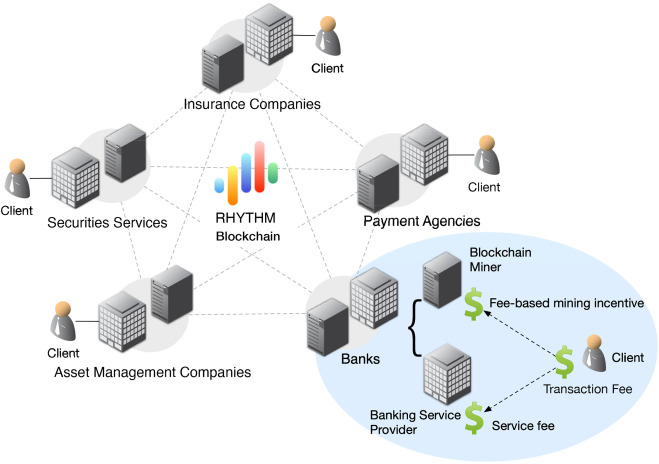
High-volume corridors with established banking relationships often remain most efficient using API-based cloud-native platforms. These systems shorten settlement chains by plugging directly into local payment networks, reducing the friction of manual reconciliation. For institutional players, the priority is usually integration depth and predictable fees rather than absolute lowest cost per transaction.
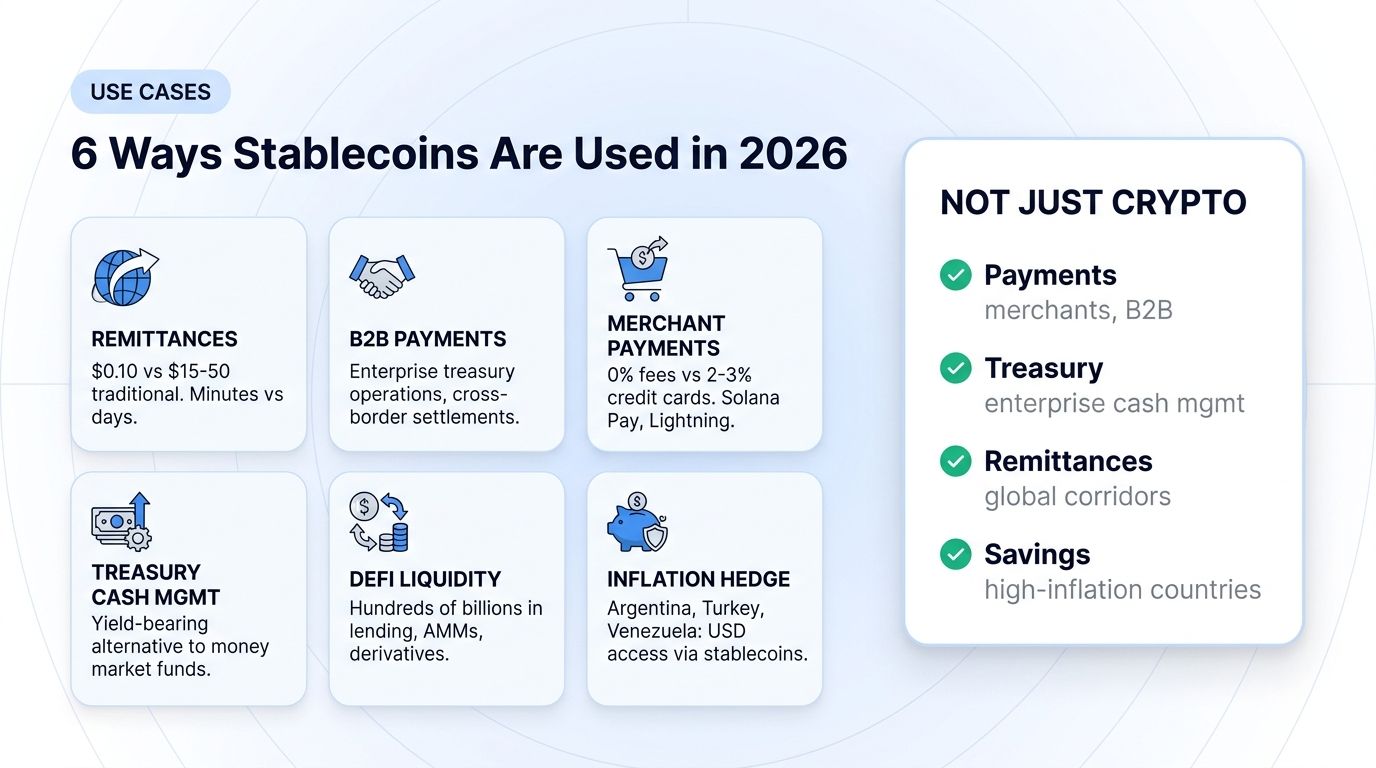
When dealing with strict jurisdictional controls, blockchain-native protocols offer a middle ground between traditional banking opacity and full public transparency. Stablecoin rails allow for programmable compliance, ensuring that only verified addresses interact with the settlement layer. This approach is critical for financial institutions navigating evolving AML (Anti-Money Laundering) frameworks in 2026.
Traditional correspondent banking remains expensive due to multiple intermediary fees and FX spreads. In contrast, digital-first infrastructure often provides near-instant settlement at a fraction of the cost. However, the true tradeoff lies in liquidity management; while crypto rails are cheaper, they require maintaining balances in stablecoins or major cryptocurrencies, introducing volatility risk if not hedged properly.
| Rail Type | Settlement | Relative Cost | Best Use Case |
|---|---|---|---|
| Traditional Banking | 1-3 days | High | Large institutional transfers |
| API Platforms | Real-time | Medium | High-volume business payments |
| Blockchain/Stablecoins | Seconds | Low | Cross-border consumer remittances |
Identifying weak options in cross-border payments
The global remittance infrastructure is shifting away from legacy correspondent banking models where payments move through long chains of intermediaries. While this transition promises efficiency, the market is saturated with solutions that fail to deliver on their promises. For businesses and individuals, the primary risk is not just high fees, but the hidden costs of slow settlement times and poor liquidity management.
A common mistake is assuming that "blockchain-native" automatically equals "cheaper." Many providers charge premium fees for stablecoins that do not significantly undercut traditional money transfer operators (MTOs) when factoring in conversion spreads and withdrawal fees. Similarly, some API-based platforms promise seamless integration but lack the robust local payout networks required for reliable delivery in emerging markets. These weak options often leave users with funds stuck in limbo or subject to unfavorable exchange rates.
To navigate this landscape, focus on the total cost of delivery rather than the headline fee. Verify that the provider has direct partnerships with local payout agents in the destination country, rather than relying on third-party aggregators. This direct rail approach minimizes the number of handoffs, reducing both cost and the risk of error. Always compare the final amount received by the beneficiary, not just the amount sent by the originator.
| Provider Type | Settlement | Total Cost | Weakness |
|---|---|---|---|
| Traditional Banks | 2-5 days | High | Opaque FX spreads |
| MTOs (Western Union) | Minutes | Medium-High | High cash-out fees |
| Crypto Rail | Minutes | Low-Medium | Volatility & compliance |
| Fintech APIs | Hours | Low | Limited local coverage |
The choice depends on your specific tradeoff between speed, cost, and regulatory compliance. For high-volume B2B payments, API-based fintech rails often offer the best balance of transparency and reliability. For individual consumers prioritizing speed over cost, established MTOs remain a safe, albeit expensive, option. Avoid providers that cannot clearly explain their liquidity sources or local payout partners, as these are often the weakest links in the chain.
Faq: global crypto remittance infrastructure: what to check next
What is the remittance infrastructure?
The remittance infrastructure is the network of systems that moves money across borders. It has historically relied on legacy correspondent banking, where payments pass through long chains of intermediaries. Today, the infrastructure is shifting toward digital-first, blockchain-enabled settlement rails that reduce these layers. This modern approach combines traditional financial rails like banks and money transfer operators with new protocols designed for speed and lower costs [src-serp-1].
Will banks use XRP for payments?
Major banks have explored using XRP (Ripple’s native token) as a bridge currency for cross-border settlements. The goal is to use XRP to provide on-demand liquidity, avoiding the need for pre-funded nostro accounts in foreign currencies. While some institutions have piloted these flows, widespread adoption depends on regulatory clarity and integration with existing banking software. It remains a specific use case rather than a universal replacement for traditional wires [src-serp-5].
Who are the top 5 recipients of remittances?
Remittance flows consistently favor emerging economies with large diasporas. According to World Bank data, the top recipients typically include India, Mexico, China, the Philippines, and Egypt. These nations receive hundreds of billions in annual transfers, making efficient infrastructure critical for their economic stability. Crypto remittances are increasingly targeting these specific corridors to offer faster settlement times than traditional wire transfers [src-serp-3].
How much does the US lose in remittances?
The United States is the world’s largest sender of remittances, but costs remain high. The U.S. lost over $200 billion to foreign countries in remittances in 2021, the last year for which reliable, bilateral data were available. This represents a significant increase from the roughly $150 billion leaving the U.S. annually when FAIR examined remittances in 2019. High fees and unfavorable exchange rates continue to erode the value of these cross-border payments [src-serp-2].
No comments yet. Be the first to share your thoughts!