What defines modern remittance rails
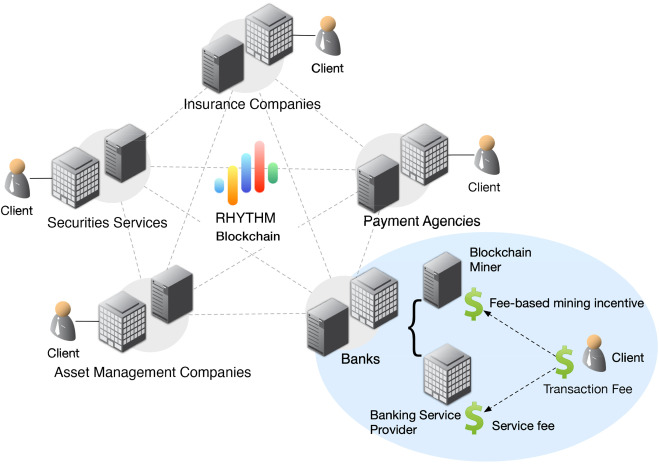
Modern remittance infrastructure is no longer just about moving money; it is about moving data across interoperable networks. The landscape has shifted from a purely correspondent banking model to a hybrid ecosystem where traditional financial rails meet blockchain-native protocols. This convergence allows for faster settlement, lower costs, and greater transparency in cross-border payments.
Legacy systems rely on a chain of intermediaries—correspondent banks, clearinghouses, and foreign exchange engines—that can take days to settle and charge significant fees. In contrast, blockchain-native protocols enable peer-to-peer transfers that settle in minutes or seconds, often at a fraction of the cost. This shift is not about replacing banks entirely but about adding a more efficient layer to the existing financial infrastructure.
The new rails are built on stablecoins, which provide the stability of fiat currencies with the speed and programmability of blockchain. These digital assets act as the bridge currency, allowing funds to move across borders without the friction of traditional foreign exchange markets. As adoption grows, the integration of these protocols with existing payment systems becomes increasingly seamless, creating a more robust global remittance network.
The infrastructure behind this shift includes robust APIs, multi-chain support, and compliance tools that ensure regulatory adherence. Companies like Lightspark and Stripe are at the forefront of this evolution, building the technology that connects traditional finance with the decentralized web. This integration is crucial for enabling real-time, borderless payments that meet the demands of a globalized economy.
Top settlement layers for cross-border flow
The choice of blockchain network dictates the efficiency of your remittance rail. While many chains exist, production infrastructure for cross-border payments converges on a few primary settlement layers. These networks balance finality speed, transaction costs, and the liquidity depth required to move value without slippage.
The market is shifting from experimental chains to those with proven institutional adoption. Polygon, Solana, and Stellar dominate this space due to their specific design optimizations for payments. Polygon offers Ethereum-level security with low fees, Solana provides high throughput for volume, and Stellar is purpose-built for fiat-to-crypto bridges.
Below is a comparison of the top three settlement layers used in current remittance infrastructure. These metrics reflect typical production conditions, though real-time network congestion can vary fees and finality times.
| Network | Finality | Avg. Fee | Liquidity Depth |
|---|---|---|---|
| Polygon | ~2 sec | <$0.01 | High (USDC dominant) |
| Solana | ~400 ms | <$0.01 | High (USDC/SOL) |
| Stellar | 3-5 sec | <$0.001 | Medium-High (XLM/Fiat) |
Liquidity depth is as critical as speed. A network with low fees is useless if there are no stablecoin pairs to convert local currency into. Polygon and Solana currently hold the deepest liquidity pools for USDC, making them the default choice for fintechs moving large volumes. Stellar remains unique for its direct integration with traditional banking rails and fiat gateways.



As an Amazon Associate, we may earn from qualifying purchases.
Stablecoin Remittance APIs and Tools
Building a cross-border payment product from scratch requires managing a complex stack: fiat on-ramps, stablecoin liquidity, blockchain gas fees, and regulatory compliance. Infrastructure providers have emerged to abstract this friction, offering APIs that let businesses launch remittance flows in days rather than months.
These tools act as the plumbing for modern crypto remittance. Instead of writing custom smart contracts or negotiating direct liquidity lines with market makers, developers integrate with platforms that handle the heavy lifting. The result is a unified interface that accepts fiat or digital assets and settles them across multiple chains and fiat rails.
Providers like Crossmint offer compliant simple APIs designed specifically for global transfers. Their infrastructure focuses on speed and cost reduction, allowing businesses to move money anywhere in the world instantly at a fraction of traditional costs. By standardizing the interaction between traditional banking systems and blockchain networks, these APIs reduce the technical barrier to entry for fintechs and neobanks.
The choice of infrastructure often hinges on which chains and fiat pairs the provider supports. Leading platforms typically integrate with major networks like Ethereum, Solana, and Tron, alongside fiat gateways in key remittance corridors. This multi-chain approach allows businesses to route transactions through the most cost-effective or fastest rail depending on the destination.
Stripe’s analysis of global remittance technology highlights how these backend tools are reshaping cross-border payments. By leveraging existing blockchain infrastructure, companies can bypass the slow, expensive correspondent banking network. The technology enables real-time settlement, which is critical for workers sending remittances to families who need immediate access to funds.
When selecting a partner, businesses should evaluate the provider’s compliance posture and uptime history. Since these APIs handle sensitive financial data and large volumes of capital, reliability is non-negotiable. The best infrastructure providers offer robust developer documentation, clear error handling, and dedicated support for integration issues.
Key markets driving remittance outflows
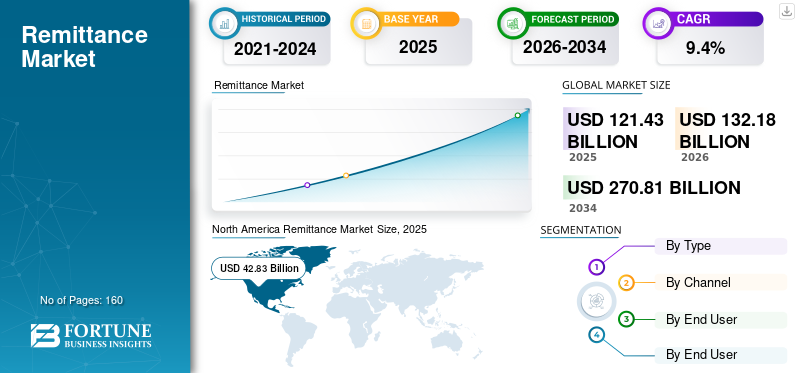
The global remittance landscape is anchored by three primary sending hubs: the United States, Saudi Arabia, and Switzerland. Together, these nations account for the lion's share of cross-border capital flows, creating intense demand for efficient crypto rails. According to World Bank data, the US alone sent $79.15 billion in 2022, followed by Saudi Arabia at $39.35 billion and Switzerland at $31.91 billion.
In the US, infrastructure is built for scale. Providers leverage stablecoin APIs and high-throughput chains like Solana or Polygon to move funds instantly. This volume requires robust compliance layers, often integrating with traditional banking gateways to ensure fiat on-ramps and off-ramps remain liquid and regulated.
Saudi Arabia and Switzerland present different challenges. Saudi infrastructure is increasingly integrating with regional blockchain initiatives, focusing on speed and lower costs for workers sending money home. Switzerland, with its dense network of financial institutions, prioritizes institutional-grade security and regulatory clarity, often utilizing private or permissioned ledgers for larger, high-value transfers.
These markets are not just sending money; they are testing the limits of current blockchain capacity. As the cross-border payments market races toward $290 trillion by 2030, the efficiency of these three hubs will dictate the global standard for crypto remittance infrastructure.
Choosing the Right Infrastructure Stack
Building a 2026 remittance strategy requires moving beyond legacy banking rails. The modern stack combines traditional FX engines with blockchain-native protocols, offering reduced costs and faster settlement times [1]. This hybrid approach allows builders to leverage the speed of crypto while maintaining the reliability of established financial networks.
Tech Stack and Liquidity
Your core infrastructure needs three layers: a compliant on-ramp/off-ramp API, a multi-chain settlement layer, and deep liquidity pools. Prioritize providers that support stablecoins on high-throughput chains like Solana or Layer 2 networks to minimize fees. Liquidity is the lifeblood of this system; ensure your partners can handle large volumes without significant slippage.
Compliance as a Feature
Key Infrastructure Components
- API Integrations: Use robust APIs for fiat conversion and identity verification. Look for providers with global coverage to support cross-border flows.
- Chain Selection: Choose chains based on finality speed and cost. Bitcoin’s Lightning Network is viable for smaller, instant transfers, while Ethereum L2s suit larger settlements.
- Liquidity Providers: Partner with multiple liquidity sources to ensure redundancy. Avoid single-point failures by diversifying across exchanges and OTC desks.
Common questions about crypto remittance
What is crypto remittance?
Crypto remittance is the process of sending digital assets from a sender’s wallet or payment platform to a recipient’s wallet, often completing within minutes. Unlike traditional banking rails that rely on correspondent banks and SWIFT, this infrastructure uses blockchain networks to move value directly. Stablecoins like USDC or USDT are the primary vehicles for this, acting as the bridge currency that avoids the volatility of native tokens like Bitcoin during transit.
Which crypto has the best infrastructure?
Stablecoins currently offer the most robust infrastructure for remittance due to their price stability and widespread integration with fiat on-ramps. Ethereum remains the dominant layer for high-value settlements, while Layer 2 solutions like Polygon and Arbitrum provide the low-cost, high-speed environment necessary for everyday transfers. Bitcoin is rarely used for direct remittance due to higher fees and slower confirmation times, though Lightning Network adoption is growing for smaller, instant payments.
What are the top 3 countries for remittance outflow?
The United States consistently leads global remittance outflows, sending approximately $79.15 billion in 2022, followed by Saudi Arabia ($39.35 billion) and Switzerland ($31.91 billion), according to World Bank and IOM data. These corridors represent the highest-volume destinations for crypto remittance infrastructure providers, driving the development of localized liquidity pools and regulatory compliance tools in these specific markets.
No comments yet. Be the first to share your thoughts!