Defining modern remittance rails
Global crypto remittance infrastructure is not a single product but a convergence of two distinct systems. On one side sits the legacy network of correspondent banking, SWIFT messaging, and Money Transfer Operators (MTOs) that have processed cross-border payments for decades. On the other are blockchain-native protocols designed for direct ledger settlement. Understanding the friction between these two models explains why the market is shifting now.
The traditional SWIFT network remains the backbone of international finance, valued for its security and regulatory compliance. However, it relies on a chain of intermediary banks, each taking a cut and adding time to the settlement process. This correspondent banking model is reliable but slow and expensive, often taking days to finalize and costing senders significant fees in hidden exchange rate margins.
The shift from correspondent banking to direct ledger settlement represents a fundamental change in how value moves across borders, reducing reliance on intermediary nodes.
Blockchain-native protocols offer a different approach. By enabling peer-to-peer value transfer without intermediaries, they promise faster settlement times and lower costs. This is not just about speed; it is about infrastructure efficiency. As global remittance flows continue to grow, the demand for rails that can handle volume without the overhead of traditional banking layers becomes critical.
The modern landscape combines these elements. It is not a simple replacement but an integration. Traditional financial rails still handle fiat on-ramps and off-ramps, while blockchain protocols handle the high-volume, low-cost transfer leg. This hybrid approach is reshaping the infrastructure, making it more resilient and accessible for the billions of users relying on remittances to support their families and economies.
Stablecoins vs. traditional fiat corridors
The global crypto remittance infrastructure is reshaping how money moves across borders, primarily by offering a direct alternative to legacy banking systems. While traditional fiat corridors rely on a chain of correspondent banks, stablecoin networks operate on public blockchains, creating a fundamentally different flow of value.
The difference is not just theoretical. Traditional wires often involve multiple intermediaries, each taking a cut and adding processing time. Stablecoin remittances bypass this friction. By moving value directly from sender to receiver, the infrastructure eliminates the need for pre-funded nostro/vostro accounts and reduces the number of handoffs.
To see the practical impact, we can compare the two models on cost, speed, and accessibility.
| Metric | Traditional Fiat (SWIFT) | Stablecoin (USDC/USDT) |
|---|---|---|
| Average Cost | 6.25% (World Bank, 2023) | < 1% (Network fees + exchange spread) |
| Settlement Time | 2-5 business days | Minutes to hours |
| Accessibility | Requires bank account | Requires internet access |
| Transparency | Opaque fees | On-chain public ledger |
The data highlights why stablecoins are gaining traction among fintech platforms and banks alike. While fiat remains the default for many, the gap in efficiency is widening. For high-volume remittances, the cost savings alone can justify the switch to crypto-stablecoin alternatives.
However, the choice isn't just about numbers. It's about who gets to participate in the global economy. Traditional banking infrastructure often excludes the unbanked, while stablecoin remittances only require a smartphone and internet connection. This accessibility is a core driver of the market's growth.
Key infrastructure providers and tools
Building a reliable global crypto remittance infrastructure requires stitching together several distinct technological layers. You need a way to hold funds securely, a way to move them across borders instantly, and a way to convert them back into local currency. For developers and businesses, this means moving away from monolithic banking solutions toward modular APIs that handle compliance, wallets, and liquidity separately.
The modern stack typically relies on embedded wallets and compliance automation to meet regulatory standards without slowing down transactions. Providers like Crossmint consolidate these needs, offering platforms that bundle digital wallets with fiat on- and off-ramps. This consolidation reduces the friction of integrating multiple vendors, allowing teams to focus on the user experience rather than the underlying plumbing.
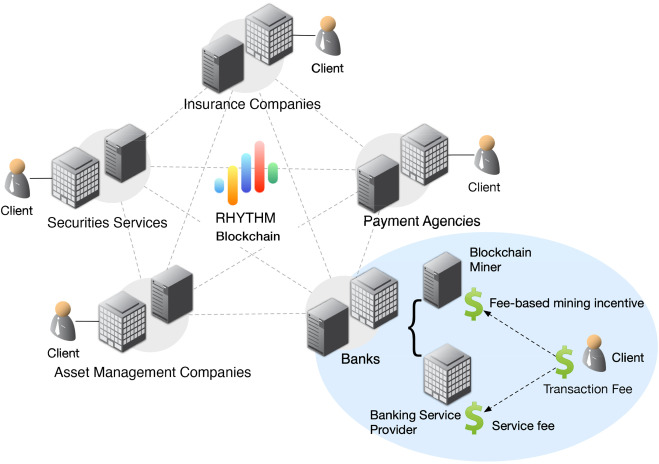
However, the landscape is not without its gaps. As noted in industry discussions, providers often fall into two buckets: those focused purely on crypto rails and those trying to replicate traditional banking infrastructure. The most effective solutions bridge this divide, offering the speed of stablecoins with the familiarity of traditional payment interfaces. This hybrid approach is critical for reaching unbanked populations who may not be comfortable with complex crypto interfaces but need access to low-cost cross-border payments.
For teams looking to secure their infrastructure or test these tools, having the right hardware and developer kits is essential. Below are some recommended tools for managing crypto assets and testing remittance flows.


As an Amazon Associate, we may earn from qualifying purchases.
Market trends and adoption signals
The global crypto remittance infrastructure is shifting from experimental pilot programs to established financial corridors. While traditional corridors remain dominated by legacy players, the underlying rails are changing. Stablecoins have become the preferred medium for cross-border value transfer, not just for their speed, but for their ability to bridge the gap between volatile cryptocurrencies and the fiat systems that still govern daily commerce.
Institutional interest is no longer speculative. Major payment processors and fintech platforms are integrating stablecoin settlement layers to reduce friction. As noted by industry analyses from PCMI, stablecoins are actively lowering remittance costs and enabling faster settlement times, gaining traction specifically among banks and fintech platforms that need to compete with traditional wire services. This isn't about replacing banks entirely; it's about upgrading the plumbing they use to move money.
The demand is most acute in countries that rely heavily on migrant labor. According to data from the International Organization for Migration, remittances sent home by migrants abroad have surpassed foreign direct investment in boosting the GDP of developing nations. The top recipients—India, Mexico, China, the Philippines, and Egypt—represent massive markets where transaction fees and settlement delays have historically eaten into household incomes. Crypto remittance infrastructure offers a tangible solution to these pain points, providing a faster, cheaper alternative to the "big four" traditional providers like Western Union and MoneyGram.
To understand the liquidity driving this shift, it helps to look at the stablecoin market itself. The stability and volume of assets like USDC and USDT are the bedrock of this infrastructure. Below, we track the price action of major stablecoin pairs to contextualize the liquidity depth available for cross-border settlements.
This stability is critical. When institutions move millions in remittances, they cannot afford the volatility that plagued early crypto adoption. The convergence of regulatory clarity, institutional-grade stablecoins, and high-demand recipient countries is creating a self-reinforcing cycle. As more volume flows through these digital rails, the infrastructure becomes more robust, cheaper, and faster, further driving adoption in key markets.
Navigating Global Regulatory Frameworks
Compliance is the heaviest anchor in global crypto remittance infrastructure. Unlike traditional banking, where rules are often established decades ago, crypto operates in a patchwork of evolving national policies. Infrastructure providers must build systems that satisfy strict anti-money laundering (AML) and know-your-customer (KYC) requirements across multiple jurisdictions simultaneously.
The World Bank emphasizes that robust financial infrastructure requires safe, efficient digital frameworks to support cross-border flows 1. For crypto remittance platforms, this means integrating real-time transaction monitoring and identity verification that rivals the security standards of SWIFT. Failure to align with these expectations can result in frozen assets or loss of banking partnerships.
Major players like Stripe and Lightspark are addressing this by embedding compliance directly into their protocol layers rather than treating it as an afterthought. This approach allows them to maintain liquidity while meeting regulatory scrutiny. As the market matures, the ability to navigate these hurdles becomes a primary differentiator between viable infrastructure and speculative projects.
Frequently asked: what to check next
The global crypto remittance infrastructure is evolving rapidly, but traditional players and specific recipient nations still dominate the conversation. Here are answers to the most common questions about market leaders and top recipients.
Who are the top recipients of remittances?
India, Mexico, China, the Philippines, and Egypt consistently rank as the top five remittance recipient countries. According to the International Organization for Migration, money sent home by migrants has surpassed foreign direct investment in boosting the GDP of developing nations. As global crypto remittance infrastructure expands, these countries are increasingly adopting stablecoin rails to reduce fees and improve speed for these critical flows.
Which cryptocurrency has the best infrastructure?
Bitcoin remains the most widely adopted cryptocurrency for cross-border value transfer due to its decentralized network and liquidity. However, for remittance infrastructure specifically, stablecoins like USDC and USDT offer superior speed and cost-efficiency. Platforms like Stripe and Lightspark are integrating these assets into traditional payment rails, making them the practical choice for high-volume remittance corridors where price stability is paramount.
What are the big four remittance companies?
The traditional remittance landscape is dominated by Western Union, MoneyGram, Intermex, and Ria (owned by Euronet). While these giants have faced challenges from digital disruption, they remain significant players. The shift toward global crypto remittance infrastructure is forcing these companies to adapt, with many exploring blockchain partnerships to compete with the lower costs and faster settlement times offered by native crypto solutions.
No comments yet. Be the first to share your thoughts!